
Clogged Drain Nightmares
There is a unique brand of humility that comes with calling a plumber. You stand there, apologizing for the mess, while the professional calmly unpacks their tools, seemingly unfazed by the standing water and the faint smell emanating from your sink. To you, this is a disaster. To them, it’s Tuesday.
But what separates the average homeowner from the seasoned plumber isn’t just technical knowledge—it’s the sheer volume of horror stories they accumulate. Plumbers are the unsung archaeologists of modern civilization, digging through the sedimentary layers of our daily lives to uncover what we’ve washed away and forgotten.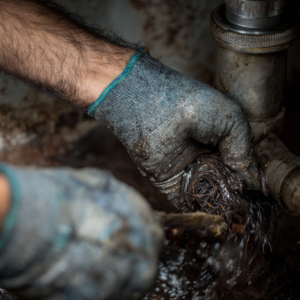
If you have ever suffered from a slow drain, you have likely wondered, What could possibly be causing this? The answer, as it turns out, ranges from the merely disgusting to the truly unbelievable. We’ve spoken with industry veterans and scoured plumbing forums to compile a list of the grossest, most shocking, and occasionally bizarre things professionals have pulled out of clogged drains.
Brace yourself. You may never look at your sink the same way again.
1. The Legendary Greaseberg
If you pour cooking grease down the kitchen sink, you are not simply washing it away. You are committing a long-term crime against your plumbing. Plumbers have a name for the congealed, rock-hard mass that forms when fats, oils, and grease solidify in cold pipes: the greaseberg.
These monstrosities are exactly what they sound like—massive, calcified lumps of bacon fat, butter, and cooking oil that accumulate over years. They start as a thin coating on the pipe walls, but like a coral reef, they grow as more grease is added. They trap food particles, soap scum, and even small utensils, creating a clog so dense that it often requires hydro-jetting (blasting water at extreme pressure) to break apart.
One municipal plumber recalled pulling a greaseberg the size of a small dog out of a main sewer line. It had the consistency of stale candle wax mixed with wet concrete and smelled like a landfill on a hot summer day. The homeowner had no idea they’d been contributing to it for a decade by simply “washing away” their frying pan residue.
2. The Hair Monster
Hair is the undisputed king of bathroom drain clogs. Individually, a few strands going down the shower drain seem harmless. But hair doesn’t dissolve. It tangles, it mats, and it acts like a net, catching soap scum, body oils, and minerals from hard water.
When a plumber pulls a hair clog from a shower drain, it rarely comes out in pieces. It comes out as a single, continuous entity—a slimy, grayish-brown rope that can stretch several feet long. Plumbers affectionately refer to these as hair snakes or drain worms.
The truly horrifying aspect of these clogs isn’t just their size; it’s their composition. Because they’re coated in layers of decomposing soap, dead skin cells, and bacteria, they have a texture that defies description—somewhere between wet felt and spoiled custard. One plumber shared a story of a client who complained of a “smell like death” in her bathroom. After snaking the drain, he extracted a hairball so massive it had been trapping water and organic matter to the point of creating a small, anaerobic ecosystem beneath her shower grate. The smell, he noted, was indescribable.
3. The Flushable Wipes Wall
There is perhaps no single product that plumbers despise more than the marketing term “flushable wipes.” Despite what the packaging promises, these wipes do not disintegrate like toilet paper. They are designed for durability, and that durability translates into plumbing nightmares.
Because they are fibrous and strong, flushable wipes don’t dissolve; they snag on any imperfection inside a pipe. Over time, they create a barrier that catches other wipes, grease, and debris, eventually forming a complete blockage.
Plumbers often pull out wipes that are still perfectly intact, with the brand logo clearly visible, despite having been in the sewer line for months. In severe cases, they form a “wipe wall” that requires a powerful auger to breach. One plumber recounted a job where a family of four had been using flushable wipes for two years without issue—until the main line backed up into the basement shower. He extracted a solid mass of wipes measuring over six feet long. The family now uses a trash can.
4. Children’s Toys and Lost Treasures
If you have toddlers, your plumbing is a ticking time bomb. Plumbers frequently retrieve toys from toilets and drains. The classics include action figures (often posed in a heroic stance, mid-pipe), toy cars, and sippy cup parts. However, the most common toy clog? The rubber duck. Its buoyancy and rounded shape make it the perfect storm for creating a seal in a toilet trap.
But it’s not just toys. The drain is also a vortex for lost valuables. Plumbers have legendary stories of retrieving wedding rings, diamond earrings, and gold necklaces from sink P-traps.
One particularly heartwarming (if nauseating) story involves a woman who lost her wedding ring down the kitchen sink while washing dishes. She called a plumber in tears. He removed the P-trap, and there it was, nestled in a bed of cold, congealed mashed potatoes and dishwater sludge. He charged her for the service call, but she sent him a fruit basket for a month. The moral of the story: if you drop something valuable down the drain, do not run the water. Call a plumber immediately. The P-trap is designed to catch heavy objects, but running the faucet can push it past the trap and into the main line, where it becomes nearly impossible to recover.
5. The Wildlife That Moved In
Sometimes, the clog isn’t an inanimate object. Sometimes, it’s a tenant.
Plumbers who work in areas with aging sewer infrastructure or homes with exposed vent pipes frequently encounter animals that have taken up residence in the plumbing. The most common culprits are rats and snakes.
Rats are excellent swimmers and can enter sewer lines through cracks or open vent stacks. They often get trapped in toilet bends or main lines, unable to go forward or backward. When a plumber pulls a dead rat out of a main line, it is usually in an advanced state of decay—a bloated, furless mass that explains why the homeowner was complaining of a smell “like a corpse” coming from the basement.
Snakes, on the other hand, often enter through roof vent pipes in search of warmth. One plumber in Florida shared a story of a homeowner who called because her toilet was “acting strange.” When he removed the toilet to snake the line, he discovered a six-foot rat snake coiled comfortably inside the toilet’s internal porcelain trap. The snake was alive, unharmed, and decidedly unimpressed with the eviction.
6. The Concrete Time Bomb
This entry falls less into the “gross” category and more into the “how did this happen?” category. Plumbers often find hardened concrete, grout, and mortar in drains. This usually happens after DIY home renovation projects.
Homeowners tiling a bathroom floor will sometimes rinse their grout sponges in the bathtub or dump leftover mortar down a utility sink, assuming that because it’s liquid, it will simply wash away. It will not. Grout and concrete are heavy and settle at the lowest point in the pipe, where they harden into an immovable rock.
By the time the plumber arrives, the concrete has fully cured, effectively turning the pipe into a solid block. There is no snake, auger, or chemical that can dissolve cured concrete. The only solution is to jackhammer the floor, cut out the section of pipe, and replace it. It’s an expensive, messy lesson in why renovation debris belongs in a trash bag, not a drain.
7. The Sludge Popsicle
When a clogged drain is neglected for years—decades, even—the buildup isn’t just a clog; it’s a geological formation. Plumbers call this sludge, and it is the foulest substance known to home maintenance.
This sludge is a concentrated amalgamation of everything that has ever gone down the drain: hair, soap, toothpaste, shaving cream, urine, feces (in the case of toilets), cooking oil, coffee grounds, and the bacteria that feeds on all of it. In a main sewer line, it accumulates into a thick, black, tar-like paste that coats the entire interior of the pipe.
When a plumber uses a drain snake to clear a main line, they often pull back the cable to find it coated in a substance that one professional described as “the inside of a garbage disposal mixed with a port-a-potty.” It has a smell that clings to clothing for days and a consistency that cannot be washed off with soap alone. Some plumbers keep dedicated “sewer clothes” for these jobs because the smell of sludge is so pervasive it will ruin everyday laundry.
8. The Medical Mystery
Dental floss is surprisingly destructive for clogged drains. Unlike hair, which breaks under tension, dental floss is strong, thin, and waxy. When flushed or washed down a drain, it doesn’t clump; it tangles into a fibrous net that wraps around the internal mechanisms of pumps and impellers.
Plumbers have pulled out masses of dental floss that have wound themselves into tight, almost machine-knitted balls. The same goes for fishing line—a surprisingly common find in households with anglers who clean their gear in the utility sink.
Then there are the medical items. Contact lenses are a frequent sight. Because they are clear and gelatinous, they don’t usually cause clogs individually, but they accumulate in P-traps, creating a slimy film. Dental retainers, partial dentures, and even hearing aids have all been recovered from clogged drains—usually by a plumber who is more surprised than the homeowner that the missing item has been living in the u-bend for six months.
Conclusion: An Ounce of Prevention
While these stories are entertaining (and a little horrifying), they underscore a serious point: what goes down your drain doesn’t just disappear. It accumulates, congeals, and eventually requires a professional to extract it with extreme prejudice.
The good news is that most of these nightmare scenarios are preventable for most clogged drains. Invest in drain strainers for your sinks and showers. Never pour grease down the kitchen sink. Treat “flushable” wipes with deep suspicion and dispose of them in the trash. And if you’re doing a renovation, treat your drains like the sacred infrastructure they are—keep grout, paint, and concrete far, far away.
And if you ever find yourself staring at a clogged drain, wondering what could possibly be causing it, just remember: it could be a lost treasure, a forgotten toy, or a massive greaseberg. Whatever it is, the plumber has almost certainly seen worse in a clogged drain.